

Tree Preservation Strategies That Support Safer Construction and Redevelopment Projects
July 8, 2026 4:32 pmConstruction projects often place mature trees at risk long before heavy equipment arrives on-site. Proper tree preservation planning helps reduce safety hazards, prevent structural damage, protect property value, and support healthier urban landscapes during redevelopment work in New Orleans, LA. When preservation starts early, builders and property owners can avoid costly mistakes that weaken or kill valuable trees months after construction ends.
Large trees provide shade, drainage support, soil stability, and visual character across older neighborhoods in the Greater New Orleans area. Historic redevelopment projects in particular depend on preserving mature trees that define the appearance and environmental balance of a property. A structured preservation plan keeps construction moving while helping important trees survive major site changes.
Why Does Tree Preservation Matter During Construction Projects?
Tree preservation protects both the project site and the long-term health of mature trees. Construction damage often happens below ground, where root systems are hidden. Even small grading changes or repeated equipment traffic can weaken a tree permanently.
In older parts of New Orleans, large live oaks and historic trees often sit close to buildings, sidewalks, utilities, and drainage systems. Removing them can change water flow patterns and increase soil erosion. Mature trees also raise property appeal and help reduce surface heat around commercial and residential developments.
Tree preservation also improves job-site safety. Dead limbs, unstable root systems, and stressed trees can become hazards during redevelopment work if they are not inspected early. A preservation strategy allows contractors to identify risks before excavation begins.
What Happens to Trees During Construction Without Protection?
Most construction-related tree damage happens slowly and may not appear until months or years later. Trees can look healthy immediately after redevelopment, while hidden root injuries continue spreading underground.
Common construction impacts include:
- Soil compaction from trucks and heavy machinery
- Root cutting during trenching or foundation work
- Grade changes that bury root flare zones
- Concrete washout near root systems
- Mechanical bark damage from equipment
- Poor drainage caused by new hardscapes
Many property owners assume trees only need protection above ground. In reality, roots often extend two to three times wider than the canopy. Cutting a major root on one side can reduce stability and increase the chance of tree failure during storms common in southeast Louisiana.
Historic trees in Metairie and New Orleans are especially vulnerable because many already face age-related stress. Construction pressure can push weakened trees beyond recovery if preservation steps are delayed.
How Early Should Tree Preservation Planning Begin?
Tree preservation planning should begin before site design and permitting. Early planning gives engineers, contractors, and arborists time to adjust layouts around important trees instead of reacting after damage occurs.
The first step usually involves a professional tree assessment. This identifies which trees are healthy enough to preserve and which pose safety concerns. Preservation efforts work best when focused on structurally sound trees with long-term growth potential.
During early planning, preservation specialists may recommend:
- Moving utility lines away from root zones
- Adjusting driveway placement
- Creating protective fencing boundaries
- Changing excavation methods
- Installing drainage safeguards
- Scheduling pruning before equipment arrives
These adjustments often cost far less than emergency removals, property damage repairs, or failed landscaping replacements later.
For redevelopment projects in New Orleans, preservation planning also helps properties comply with local tree ordinances and historic district expectations.
What Is a Tree Protection Zone and Why Does It Matter?
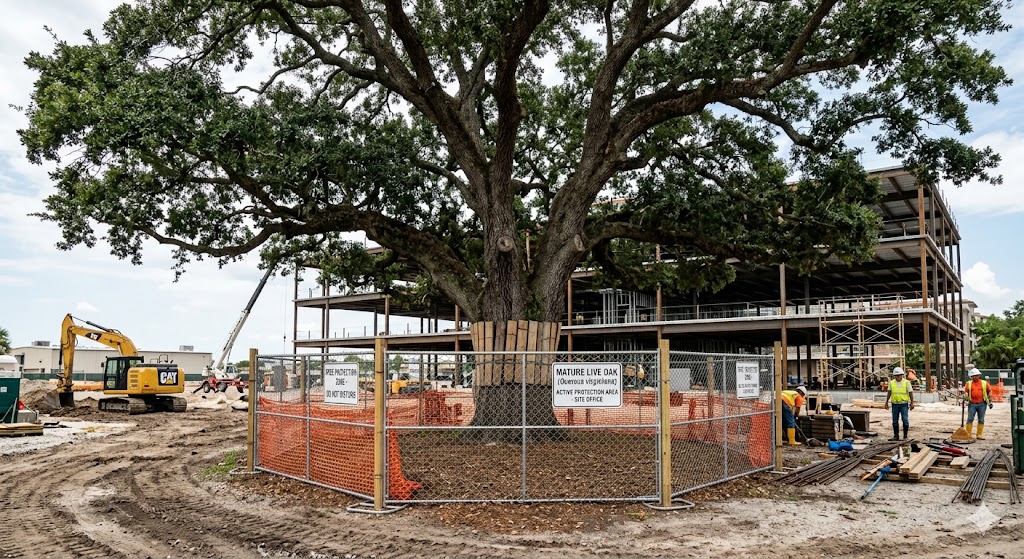
A tree protection zone creates a restricted area around a tree where construction activity is limited or prohibited. This zone protects roots, trunks, and surrounding soil from damage during redevelopment work.
Protection zones are usually based on trunk size and canopy spread. Many contractors make the mistake of placing fencing too close to the trunk, leaving roots exposed to compaction and trenching damage.
A proper protection zone may include:
- Temporary fencing
- Warning signage
- Mulch layers for soil protection
- Restricted vehicle access
- Material storage limits
- Controlled grading boundaries
Protection fencing should remain in place for the full construction period. Removing barriers too early often leads to accidental damage from subcontractors or equipment operators entering sensitive root areas.
In dense construction areas across Gretna and Algiers, protection zones help organize work crews while reducing avoidable tree injuries.
Which Construction Activities Cause the Most Root Damage?
Excavation and soil compaction create the most serious root injuries during construction projects. Roots need oxygen, moisture, and stable soil conditions to survive. Heavy machinery compresses soil and limits airflow underground.
Trenching for utilities is another major issue. Contractors sometimes cut large roots without realizing how much stability they provide. Losing several structural roots on one side can make a tree unstable during strong winds or saturated soil conditions.
Other high-risk activities include:
Grade Changes Around Mature Trees
Raising or lowering soil levels can suffocate roots or expose them to drying conditions. Even a few inches of fill dirt can affect oxygen flow around older trees.
Concrete and Asphalt Installation
New pavement traps moisture differently and changes root temperatures. Large paved surfaces can also redirect water away from trees that relied on natural drainage patterns for decades.
Storing Materials Near Trees
Stacks of brick, lumber, or equipment may seem harmless temporarily. The weight can compact soil heavily enough to damage fine feeder roots that absorb water and nutrients.
Experienced preservation crews often recommend alternate access routes and low-impact equipment to reduce pressure around historic trees.
How Can Pruning Support Safer Redevelopment Work?
Strategic pruning reduces construction risks while improving tree stability. Pruning should focus on removing dead, weak, or hazardous limbs before work begins.
Construction vibration and equipment movement can shake unstable branches loose. Preventive pruning lowers the chance of falling limbs damaging workers, vehicles, or nearby structures.
Proper pruning may also help:
- Improve equipment clearance
- Reduce branch interference with cranes
- Balance weight distribution
- Improve storm resistance
- Remove diseased wood before stress increases
Over-pruning creates its own problems. Cutting too much canopy at once places additional stress on trees already coping with root disturbance and environmental changes.
Older live oaks throughout Jefferson and Orleans parishes require careful structural pruning techniques that support long-term health rather than aggressive canopy reduction.
Why Is Soil Management a Major Part of Tree Preservation?
Healthy soil determines whether preserved trees survive after redevelopment ends. Construction changes how water moves through a site, and compacted soil can remain damaged for years.
Soil testing helps preservation specialists understand drainage conditions, pH levels, and nutrient balance before work begins. In some cases, air excavation tools are used to expose roots safely without cutting them.
Soil management strategies may include:
- Mulching root zones
- Vertical mulching for aeration
- Drainage correction
- Root collar excavation
- Moisture monitoring
- Organic soil amendments
One common mistake is overwatering stressed trees after construction. Compacted soil drains poorly, and excessive irrigation can increase fungal root problems instead of helping recovery.
In New Orleans, where heavy rainfall and saturated ground conditions are common, drainage planning plays a large role in successful preservation outcomes.
What Are the Biggest Tree Preservation Mistakes Property Owners Make?
Many preservation failures happen because protection starts too late or because trees appear healthy after damage occurs. Construction stress often develops slowly.
Some of the most common mistakes include:
Waiting Until Construction Starts
Once excavation begins, root damage may already be permanent. Early planning gives crews more flexibility to protect important trees.
Allowing Open Access Around Trees
Without clear barriers, subcontractors may park equipment or store materials inside root zones without realizing the damage being caused.
Ignoring Drainage Changes
New sidewalks, parking lots, and grading patterns can redirect water away from trees that depended on decades of natural moisture flow.
Hiring Crews Without Preservation Experience
General landscaping knowledge is different from construction preservation work. Historic trees require specialized care methods during redevelopment projects.
Properties across Metairie and New Orleans often contain mature trees growing in tight urban spaces. Preservation work in these settings requires careful coordination between multiple trades.
How Does Professional Tree Preservation Support Long-Term Property Value?
Healthy mature trees add long-term value to both residential and commercial properties. They improve curb appeal, provide shade, lower surface temperatures, and support stronger landscape aesthetics after redevelopment finishes.
Preservation also reduces future liability concerns. Trees weakened during construction may fail years later during storms, creating risks for structures, vehicles, and pedestrians.
Professional preservation planning helps property owners:
- Reduce avoidable removals
- Lower replacement landscaping costs
- Maintain historic property character
- Improve post-construction appearance
- Support healthier long-term tree growth
- Limit storm-related hazards
For redevelopment projects in New Orleans, preserving mature trees often helps properties stand out in competitive residential and commercial markets.
FAQs
Can construction damage kill a tree years later?
Yes. Root injuries and soil compaction may weaken a tree slowly over time. Some trees decline several years after redevelopment because underground damage interrupts water and nutrient flow.
How close can construction equipment get to mature trees?
The safe distance depends on the tree’s size, species, and root spread. In many cases, protection zones should extend beyond the canopy edge to reduce soil compaction and root injury.
Are live oak trees harder to preserve during redevelopment?
Live oaks often have large, widespread root systems that require extra protection. Their long lifespan and structural size make early preservation planning especially important.
Does pruning help trees survive construction stress?
Proper pruning can reduce structural strain and remove hazardous limbs before work begins. Trees should only be pruned strategically because excessive cutting creates additional stress.
Can damaged roots be repaired after construction?
Some minor root injuries can recover with proper soil care and monitoring. Severe root loss usually cannot be reversed, which is why prevention remains the most effective strategy.
Tree preservation requires planning, technical knowledge, and ongoing monitoring throughout every stage of construction. At Tree Man Inc., we provide professional tree preservation services for historic trees and redevelopment projects across New Orleans, Metairie, Gretna, and Algiers, LA. Our experienced team helps property owners protect valuable trees while supporting safer construction environments and long-term landscape stability. Request a free estimate today.
Categorised in: Tree Service
This post was written by admin
Comments are closed here.