

What Happens When Emergency Tree Damage Is Not Addressed Quickly
April 10, 2026 5:29 pmEmergency tree damage that is left unattended can quickly become dangerous for people, homes, and nearby property. Broken branches, split trunks, or leaning trees often continue to weaken after a storm. What appears stable immediately after damage can collapse hours or days later.
In New Orleans, strong winds, heavy rain, and saturated soil increase the chances of trees failing after storms. When damaged trees remain untreated, they may fall onto roofs, vehicles, power lines, or neighboring properties. Early removal or stabilization reduces these risks and helps prevent more serious structural damage.
Ignoring emergency tree damage also makes cleanup harder. A tree that could have been safely trimmed or removed may eventually break apart and spread debris across the yard or street.
Why Storm-Damaged Trees Fail Days After the Storm
Many homeowners assume that if a tree survives the storm, it is safe. This assumption can be misleading. Trees often sustain hidden structural damage that takes time to show. Storms can weaken root systems, crack the trunk internally, or tear large limbs partially away from the tree. These injuries may not cause immediate collapse. Instead, the tree slowly shifts under its own weight until the damaged section fails.
Another common issue in New Orleans is saturated soil. When soil stays wet for days, roots lose their grip. A tree that looked stable right after the storm may begin leaning as the ground softens. Delayed tree failures may occur on the next windy day, after additional rainfall, or during cleanup when branches are disturbed.
This is why arborists recommend inspecting storm-damaged trees quickly, even if they appear stable at first glance.
Structural Damage to Homes and Buildings
A damaged tree leaning toward a structure creates a serious risk to roofs, fences, and exterior walls. Even a medium-sized limb can puncture roofing materials or break gutters when it falls. When homeowners delay emergency tree removal, the weight of broken limbs may continue pressing against structures. Over time, this pressure can cause roof decking damage, broken windows, fence collapse, and damage to siding or exterior trim.
In older neighborhoods around New Orleans, large oak trees grow close to homes. When limbs crack during storms, they may remain suspended above rooftops. These hanging branches, often called “widowmakers,” can drop without warning. Prompt removal protects the building and prevents more expensive structural repairs.
Power Line and Utility Hazards
Tree damage near power lines is one of the most dangerous situations after severe weather. Broken limbs can fall into electrical lines or push them downward.
When emergency tree damage is not addressed quickly, several hazards may develop:
- Electrical outages affecting nearby homes
- Fire risk from damaged lines
- Live wires falling onto sidewalks or roads
In some cases, branches resting on power lines may appear harmless at first. Wind movement or additional rain can cause the branch to shift, pulling the line down.
In New Orleans neighborhoods with mature tree canopies, this problem is common after hurricanes or strong thunderstorms. Tree professionals coordinate with utility providers to safely remove branches around electrical lines.
Attempting to handle these situations without trained equipment can be extremely dangerous.
Pest and Disease Problems After Tree Damage
Storm injuries leave trees exposed to insects and fungal infections. When bark splits or limbs tear away, the inner wood becomes vulnerable to pests. If the damage remains untreated, insects such as beetles and borers may move into the weakened tree. These pests spread to nearby healthy trees.
Open wounds also allow fungi to enter the trunk. Over time, this can lead to internal decay that weakens the tree even further.
Common problems after untreated tree damage include:
- Wood rot inside the trunk
- Increased insect infestations
- Slow tree death over several months
- Spread of disease to surrounding trees
Property Liability and Insurance Issues
Ignoring hazardous tree damage can also create legal and insurance complications. If a damaged tree falls onto a neighbor’s property after you were aware of the risk, liability concerns may arise. Insurance companies may review whether a homeowner took reasonable steps to address visible hazards. When a clearly damaged tree is ignored for long periods, coverage disputes can occur.
Addressing emergency tree damage quickly helps demonstrate responsible property maintenance. Homeowners should document tree damage with photos and arrange professional inspections to support insurance claims when needed.
Blocked Access and Safety Hazards Around the Property
Fallen or partially fallen trees block driveways, sidewalks, or entry points to homes. This can interfere with daily activities and emergency access.
When damaged trees are not cleared quickly, problems may include:
- Blocked driveways preventing vehicles from leaving
- Limited access for emergency responders
- Tripping hazards from scattered branches
- Reduced visibility near roads or intersections
Large limbs that remain suspended in trees are also dangerous for people walking beneath them. Even small wind movements can cause weakened branches to fall. Professional emergency tree services use specialized equipment to safely remove debris and restore safe access around the property.
Why DIY Removal Can Make Tree Damage Worse
Many homeowners consider removing storm-damaged trees themselves. While smaller branches can sometimes be handled safely, large damaged trees present serious risks.
Storm damage leaves trees under tension. Branches may be twisted or support the weight of other limbs. Cutting the wrong section can cause sudden movement or collapse.
Common risks of DIY removal include:
- Chainsaw injuries
- Falling limbs
- Tree sections rolling or shifting unexpectedly
- Property damage from uncontrolled falls
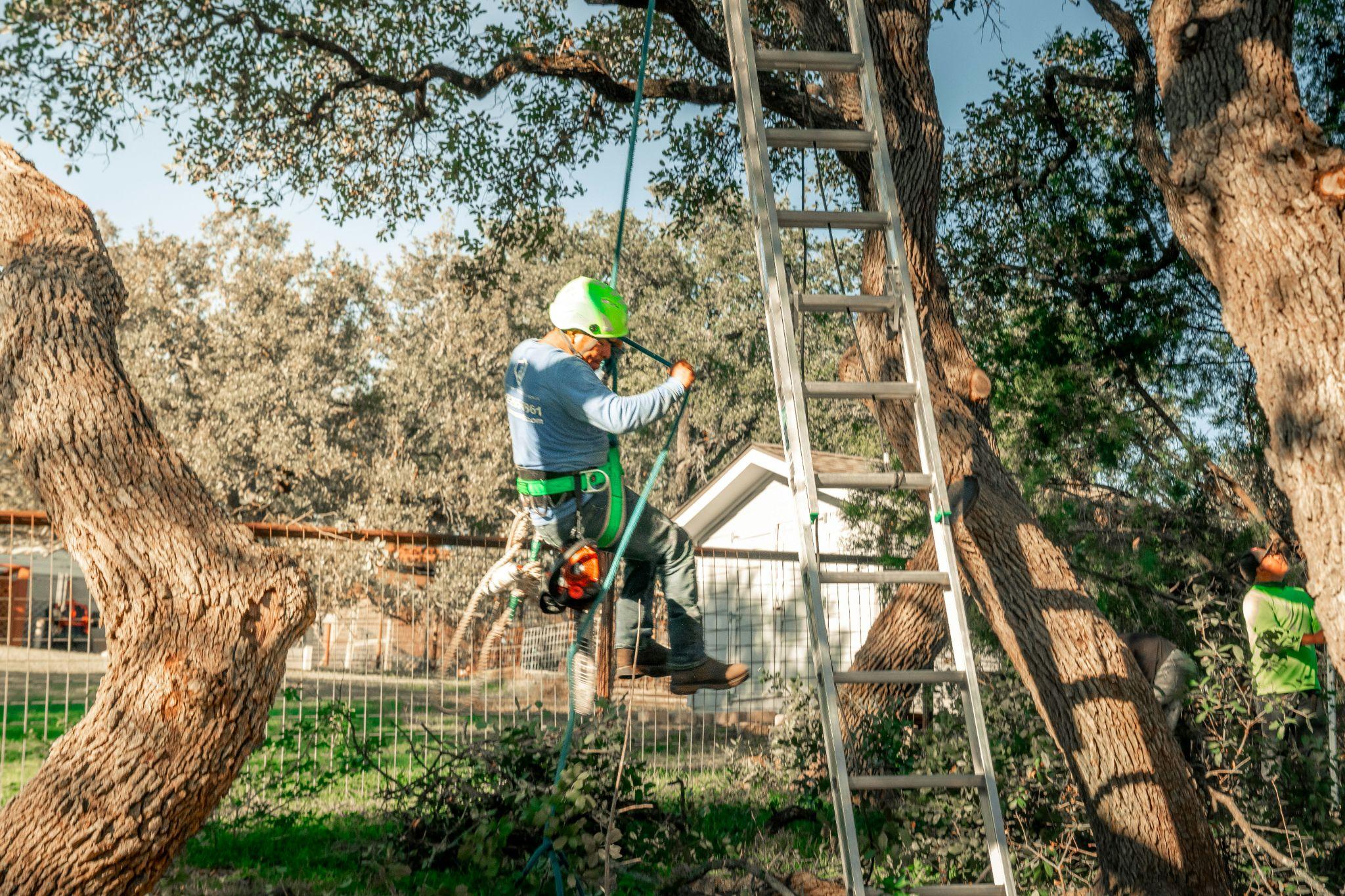
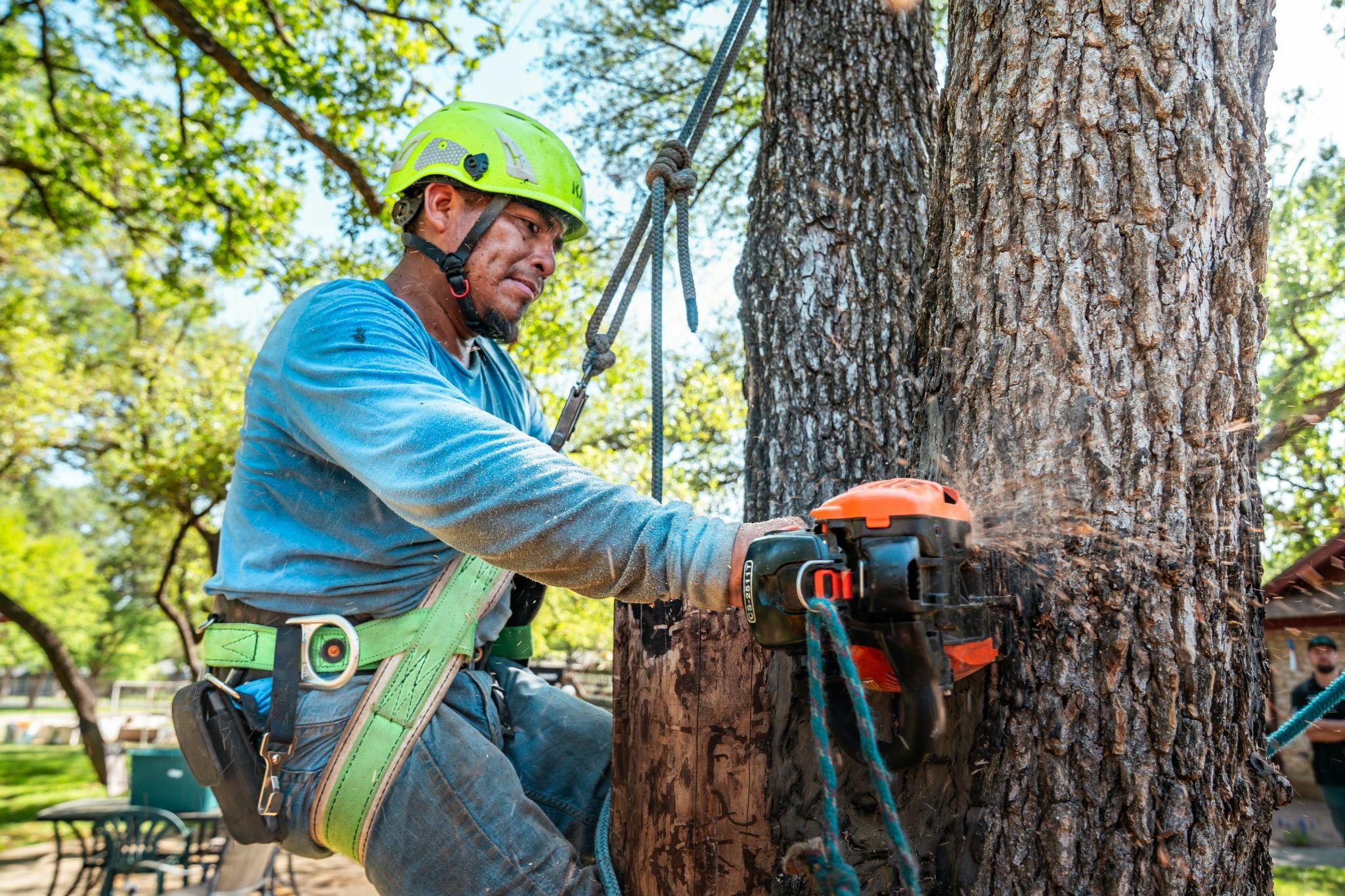
Professional tree crews use equipment such as bucket trucks, cranes, and rigging systems to control how branches are removed. These tools allow technicians to dismantle damaged trees safely without causing additional harm to the property.
Signs a Storm-Damaged Tree Needs Immediate Attention
- A tree leaning suddenly after a storm
- Large cracks running through the trunk
- Roots lifting out of the ground
- Branches hanging over structures or power lines
- Split trunks or major limbs partially detached
In New Orleans, saturated soil can worsen these conditions quickly. Trees that appear stable one day may shift as the ground softens.
How Professional Emergency Tree Services Respond
Emergency tree removal companies follow a structured process to manage hazardous trees safely. The first step is a rapid assessment. Arborists evaluate the tree’s stability, nearby structures, and potential hazards such as power lines. Next, crews create a removal plan that controls where branches will fall. Specialized tools may include:
- Bucket trucks for high branches
- Rigging ropes to lower limbs safely
- Chainsaws designed for heavy cutting
- Wood chippers for debris removal
In storm-prone areas like New Orleans, experienced crews also understand how local tree species respond to wind damage. This knowledge helps determine whether the tree can recover or must be removed. Fast response services help restore safety to the property while limiting additional damage.
Frequently Asked Questions
1. How quickly should emergency tree damage be addressed?
Emergency tree damage should be inspected as soon as possible after a storm. Trees with cracks, leaning trunks, or hanging limbs can fail without warning. Early evaluation reduces the risk of property damage or injury.
2. Can a damaged tree recover without removal?
Some trees can recover if the damage is limited to small branches. Arborists may prune broken limbs and monitor the tree’s health. Trees with severe trunk or root damage usually require removal.
3. Does homeowner’s insurance cover emergency tree removal?
Insurance may cover tree removal when the tree damages a covered structure, such as a house or garage. Coverage rules vary between policies. Homeowners should check with their insurer before scheduling large removals.
4. What should I do immediately after storm tree damage?
Stay away from damaged trees, especially those near power lines. Photograph the damage for insurance records. Contact a professional emergency tree service to inspect the situation safely.
5. Can a partially fallen tree still be saved?
A partially fallen tree can sometimes be saved if the roots and main trunk remain stable. An arborist may use pruning, cabling, or bracing to stabilize the tree. If the roots are severely damaged or the trunk is split, removal is usually the safest option.
6. Is emergency tree removal available at night or after storms?
Many professional tree companies offer emergency services after severe storms, including nighttime response when conditions are dangerous.
Restoring Safety After Tree Damage
Emergency tree damage should never be ignored. What begins as a cracked limb or leaning tree can quickly turn into structural damage, electrical hazards, or safety risks for people nearby. Fast action helps prevent these problems from escalating.
Homeowners in New Orleans dealing with storm damage can contact Tree Man Inc. for professional emergency tree removal. Our team handles hazardous trees, storm debris, and urgent removals to help restore safety to residential properties. Contact us today to assess your storm-damaged trees.
Tags: emergency tree service, fallen tree removal, hazardous tree damage, storm damaged tree removal
Categorised in: Tree Service
This post was written by admin
Comments are closed here.