

Extending the Life of Your Historic Trees with Cabling and Bracing
February 23, 2026 3:12 pm- Historic trees in Metairie, Algiers, Belle Chasse, Gretna, Lakeview, New Orleans, and surrounding areas are living archives that add ecological, cultural, and aesthetic value, yet they face structural threats from age, storms, decay, and human activity.
- Cabling and bracing are tested, noninvasive methods that can stabilize vulnerable limbs or trunks and often add years or decades to a tree’s useful life when installed and maintained by qualified arborists.
- For property owners and stewards wanting professional assessment and installation, Tree Man Inc. offers expert tree inspections, ANSI-compliant cabling and bracing systems, and long-term maintenance plans to protect historic trees.
Historic trees store carbon, support complex urban and rural ecosystems, anchor cultural memory, and shape the character of parks, streets, and properties. Because of their size and age, older trees naturally develop structural weaknesses such as included bark at branch unions, hollowing, cracks, and long limbs that become heavier and more prone to failure. Left unaddressed, these conditions can lead to sudden limb failure, progressive decay, or the need for removal.
Caring for a historic tree is therefore both a practical safety task and a conservation ethic. Any intervention should prioritise preserving the living structure while reducing risk to people and property.
What Cabling and Bracing Actually Do
Cabling and bracing are supplemental support systems designed to reduce the movement of branches or trunks so that stressed parts of a tree are less likely to break. Cabling typically uses high-strength, flexible cables installed between major limbs or leaders to redistribute mechanical loads during wind or storm events. Bracing uses bolts or threaded rods to physically tie split or weak sections together, stabilising a failing union or a cracked trunk.
These systems do not cure underlying decay, but they change how forces move through the tree so that weaker points do not bear the full stress of wind and gravity. When chosen and installed correctly, they allow natural movement while preventing catastrophic failure.
When Cabling and Bracing Are the Right Choice
Cabling and bracing are appropriate in a range of situations, typically after an arborist has evaluated the tree and determined the primary risks. Common scenarios include:
- A large limb with an excessive crown weight that threatens to fail in storms.
- A codominant stem union with included bark that is splitting or showing surface cracks.
- A long, heavy limb that has historical or aesthetic value and for which removal would be undesirable.
- A trunk with a narrow crotch that is prone to splitting, but where structural repair can be done without removing the tree.
Not every historic tree can be saved by hardware. Where internal decay is advanced, where root failure is probable, or where the tree’s movements cannot safely be restrained, removal may remain the safest option. A competent arborist will balance the tree’s cultural and ecological value against safety and long-term viability.
Types of Systems and Materials
Static Steel Cabling
Stainless steel or galvanized steel wire rope is commonly used to connect major limbs. It is strong and durable. Properly installed, steel cables can last for many years, but must be located and attached so they do not cut into cambium as the limb grows.
Dynamic or Shock-Absorbing Systems
Newer synthetic or engineered devices include dynamic elements that absorb energy during storms. These systems reduce peak loads transferred to anchors and can be gentler on the tree, particularly for older wood.
Through-Bracing with Bolts or Threaded Rods
For split trunks or large co-dominant stems, steel rods or bolts can be used to pull sections together. Installation methods are designed to avoid compressing the wood in a way that blocks natural healing processes.
Guying and Propping
For lower branches or small-mature trees, guys or props provide additional support. These are typically temporary and used while the tree strengthens or as a short-term measure.
Choice of material depends on the tree species, the size and orientation of weak parts, the expected loads, and the tree steward’s long-term plan. A reputable arborist will explain trade-offs between permanence, maintenance, aesthetic impact, and cost.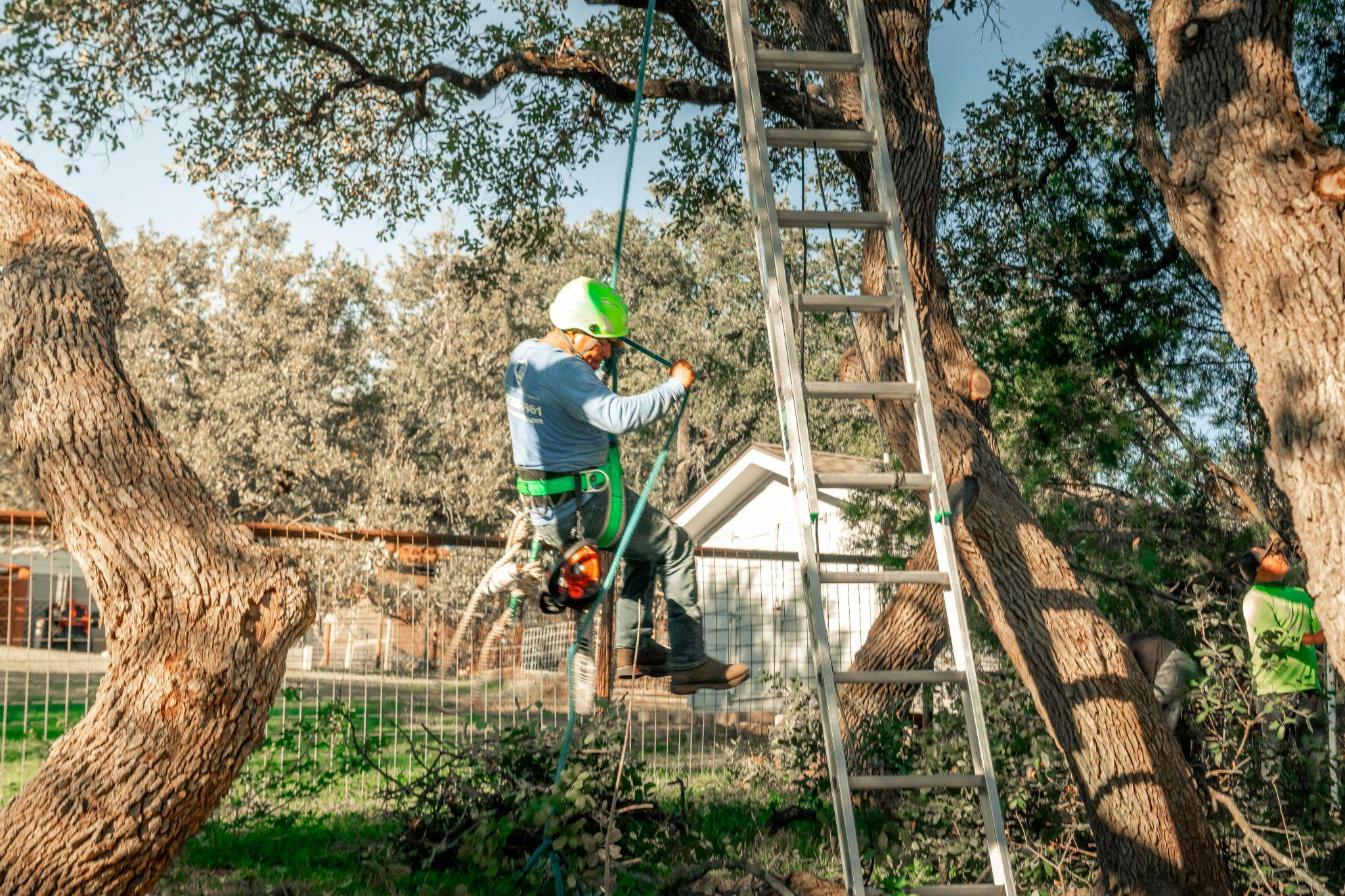
The Assessment and Installation Process
Detailed Inspection
The arborist documents decay, cracks, bark inclusions, root condition, previous wounds, and the overall health of the tree. Where necessary, they may use resistograph or sonic tomography to understand internal decay.
Structural Analysis
This may be a visual static evaluation or, for very valuable or complex trees, a more technical analysis using load assessment techniques. The objective is to identify failure modes and design a support system that mitigates the most likely failures.
Specification
The arborist writes a clear plan specifying hardware type, attachment points, installation method, and inspection schedule. This specification will reference standards such as ANSI A300 and industry BMPs.
Installation by Trained Crew
Installers use minimally invasive techniques, typically drilling small holes for fittings and avoiding unnecessary bark damage. Good practice includes using protective sleeves where hardware would otherwise rub on living tissue.
Documentation and Client Briefing
After installation, the owner receives records of what was installed, how it mitigates risk, and what maintenance actions are required.
Maintenance, Inspection Intervals, and Expected Service Life
Cabling and bracing are not set-and-forget solutions. Regular inspection is essential because trees grow, loads change, and hardware can deteriorate. Industry guidance suggests periodic inspections every few years and after significant storm events. Some systems require replacement or adjustment after a decade, while steel hardware left in a tree can remain serviceable for longer, provided it is not cutting into living wood.
Having a maintenance plan is particularly important for historic trees where the value of preservation is high. Inspections should check for fraying cables, corrosion, loose fittings, bark growth around hardware, changes in the tree that alter load patterns, and any signs that the support system is creating a problem of its own. When certificated standards are followed, many installations can add ten to fifteen years or more of useful life to vulnerable structures.
Risks, Limitations, and Honest Expectations
- Support systems do not stop decaying. They buy time and stability while the tree either compartmentalises decay or is managed for continued health.
- Incorrectly installed hardware can create new failure points. That is why inspection of potential installers and insistence on ANSI-compliant methods are crucial.
- In some cases, the presence of hardware complicates future pruning, restorations, or removal. Accurate records help future workers understand what is in place.
- Cost of installation plus ongoing maintenance must be weighed against removal and replacement costs, the tree’s cultural value, and the practical needs of the site.
Transparent communication with a qualified arborist reduces the chance of unrealistic expectations.
Cost Versus Value for Historic Trees
Cabling and bracing costs vary with tree size, the complexity of the system, access difficulty, and materials used. For historic trees, the cost calculation should consider nonmarket values such as cultural heritage, shade, wildlife habitat, and the tree’s contribution to property character and value.
Compared with removing a veteran tree and replanting, support systems are often less expensive, especially when one accounts for the time a newly planted tree takes to reach the ecological and aesthetic benefits of an old specimen. For properties where the tree is integral to the landscape or community identity, these intangible values can justify the investment in long-term structural support.
Legal, Safety, and Permitting Considerations
Municipalities sometimes have protections for heritage or specimen trees. Before any structural work, check local rules and any required permits. Additionally, property owners should confirm that the arborist carries appropriate liability insurance and follows safety regulations. For trees close to utilities, coordination with the utility company is necessary to maintain safety and compliance. A well-documented inspection and a signed scope of work protect both the owner and the service provider.
Practical Steps for Property Owners
If you are a steward of a historic tree, here are the practical next steps:
- Arrange a professional structural assessment if you see cracks, large deadwood, changes in stem alignment, or other signs of weakness.
- Request a written proposal that references installation standards, materials, and inspection schedules.
- Insist on documentation of installed hardware and a maintenance plan.
- Schedule regular inspections every few years and after major storms.
- Keep a folder or digital file with photos and the installation map so future caretakers know what is inside the tree.
Protect Your Historic Tree with Expert Care
Historic trees are irreplaceable assets that deserve thoughtful, standards-based care. When cabling and bracing are part of a deliberate conservation plan, they are powerful tools to stabilise vulnerable structures and extend a tree’s life. The key is to pair careful assessment, ANSI-guided installation, and disciplined maintenance so the tree can continue to provide ecological, cultural, and aesthetic benefits.
If you would like a professional assessment, installation, or a maintenance plan for a historic tree, Tree Man Inc. offers experienced arborists who follow industry standards and deliver long-term stewardship plans tailored to the needs of veteran trees. Schedule an inspection today and learn how cabling and bracing can protect your landscape.
Tags: arborist tree preservation, heritage tree protection, historic tree care, structural tree support, tree cabling and bracing, tree risk management, tree stabilisation, tree support systems, veteran tree maintenanceCategorised in: Uncategorized
This post was written by admin
Comments are closed here.